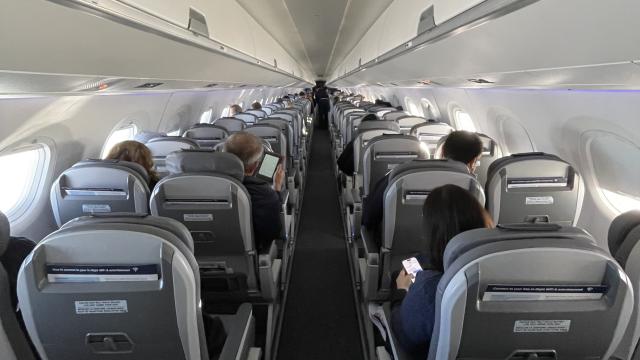
The ultimate guide to corporate flight bookings
Timing. Seat selection. Airline choice. Flights are essential to business travel, and it’s the little things that can turn a calm trip chaotic. Get the best experiences using our corporate flight booking checklist.
This guide includes:
- Challenges that corporate flight bookers face.
- Tips for booking flights.
- Using policy and travel history to improve booking strategies.
- Reasons to consider flexible fares.
- Maximizing travel savings using loyalty programs.
- The best tools for business flight booking.
- How to optimize your travel policy.
- How to get the most from corporate discounts.
- Our corporate airline booking checklist.
The departure flight sets the tone for a traveller's entire journey, and airfares make up a substantial portion of your business travel costs. Matching traveller preferences to company travel policy and budget requirements can be a monumental challenge. Thankfully, there are useful tools and proven strategies you can use to help you simplify flight bookings for your corporate employees.
In this guide, we’ll share how to do the smartest corporate flight bookings using our top tips, tools, and tactics to stay on budget and in-policy.
Contents
- Common challenges for corporate travel bookers
- Tips for corporate flight booking
- Use travel policy and past booking patterns to guide decisions
- Why flexible fares are worth considering
- Use airline loyalty programs to maximize travel savings
- What are the top tools for booking flights?
- What to include in your corporate travel policy for flight bookings
- How to maximize corporate discounts through smart trip timing
- Use this FREE corporate flight checklist before booking the ticket
Common challenges for corporate travel bookers
Challenges you may face when arranging corporate flight bookings can be both qualitative and quantitative. Some of the factors to consider include:
Managing corporate travel budgets
Are there several airfare options within your budget, or are you going to have to balance other factors, like multiple stops? Booking early saves money, but many companies still book flights just 30 days or less before business travel.
The reality is that for some industries, booking corporate flights last-minute is an unavoidable part of doing business.
Navigating flight changes and airline fees
Is the travel date set in stone? There are two ways to figure that out:
- What's the reason for travelling? For conferences and other confirmed events, changes are unlikely, while client meetings are often delayed or shifted.
- What if something goes wrong? When there are travel-related delays and disruptions, anything can happen.
Based on these two questions, think about flexible fares and if they should be a primary part of your approach to corporate airline bookings.
Accommodating traveller preferences during bookings
Travellers often have preferences for seat selection, like more legroom, having a restroom nearby, or being next to a window, so they can sleep during their flight.
It's not just a question of comfort. Some of these factors are essential for business travellers on long-haul trips. Are you aware of air travel preferences for all of your travellers? Can you access this important information in your online booking tool (OBT) or another central location?
Ensuring compliance with corporate travel policies
While you want to ensure travellers get the accommodations they prefer, business flight bookings must stay within your set travel policies.
Having preset travel policies not only helps bookers and arrangers stay compliant and within your budget. Some flight booking tools, like Melon, allow you to automate approvals to save time and energy, without sacrificing policy compliance in the process.
Tips for corporate flight booking
Each trip is different and comes with its own set of considerations for corporate travel flight bookings. Here are 10 things you should keep in mind when booking flights:
- Are there VIP travellers who require extras or flexibility?
- Do you have frequent flyers with loyalty statuses?
- Are there multiple travellers or departments flying together?
- Are travellers flying domestically or internationally?
- Are travellers heading to remote or regional destinations?
- Do travellers require additional travel documentation?
- What fare classes are available within the flights you’re considering?
- What is the purpose of the trip?
- Are there specific key dates or events involved in the itinerary?
- Would booking through a travel management company (TMC) or specialized booking tool make your process easier?
Once you’ve answered these questions confidently, then you can dive into the booking process with clear priorities.
Use travel policy and past booking patterns to guide decisions
Understanding your travel policy in as much depth as possible is important to maximizing its efficiency in your travel program - especially when it comes to flight bookings.
Ask yourself some important questions:
- What does the travel policy say about air travel?
- Are there spending caps, class-of-service restrictions, or specific approval workflows?
- Which airlines do your travellers prefer or fly most often?
Identifying these patterns can dramatically reduce time spent comparing the benefits of corporate flight bookings - especially when you’re booking for repeat destinations or high-volume routes.
It can also make a strong case for:
- Negotiating preferred rates with airlines, especially if you consolidate your air travel spending across fewer vendors.
- Integrating preferred vendors directly into your online booking tool (OBT) helps enforce policy automatically alongside a shorter booking process.
The more informed your booking strategy is, the more efficient and cost-effective it becomes.
Why flexible fares are worth considering
Flexible fares may cost a bit more upfront, but they allow changes without major penalties, protect against unexpected delays, and give your team more breathing room if plans change. For industries that require a lot of last-minute planning or adjustments to flight bookings for corporate employees, flexible fares can be essential.
Flexible fare classes can also be valuable when you're still waiting on internal approvals, visa processing for international travel, or confirmation from partners or clients. Sometimes, it’s worth spending a little more to lock in a flexible option and avoid the risk of cancellation fees or rebooking costs.
Don’t forget to compare different airports or layover options. Alternative routes you may not have considered can sometimes cut costs by hundreds of dollars per flight. Being strategic with flexibility and timing gives you a stronger grip on the budget - and that's a win for your bottom line.
Use airline loyalty programs to maximize travel savings
Loyalty programs lead to rapid rewards. With flight tickets for frequent flyers, these programs are a must. But even if your travellers aren't regularly on the road, the savings can be significant. You can also get access to top travel perks like priority boarding, free upgrades, and other exclusive deals.
Did you know that TMCs can offer exclusive negotiated rates that can be stacked with loyalty programs for even better rates? You won’t lose any existing loyalty points with a good TMC, so it’s a winning solution.
Airlines also have their own loyalty programs (in a way) with alliance programs. Airline alliance programs give you the perks and benefits of a loyalty program, but they span multiple airlines. These are some of the most popular airline alliances for business travel:
- Star Alliance includes Air Canada, Eva Air, Lufthansa, Air New Zealand, ANA, Singapore Airlines, and others.
- SkyTeam includes Delta, KLM, Air France, Korean Air, AeroMexico, and others.
- Oneworld covers American Airlines, Cathay Pacific, British Airways, Qantas, Japan Airlines, and others.
Loyalty programs can unlock new levels of savings and upgrades for your travellers - even infrequent flyers. What's not to like about that?
Now that the traveller details and data are piling up, let's take a look at travel tools for booking corporate flights.
What are the top tools for booking flights?
There are multiple travel tools for booking corporate airline tickets, including high-tech platforms, online aggregators, and innovative retailing approaches. Here are a few of the current methods to book a ticket and compare prices.
Corporate travel management technology
Most TMCs offer tools to manage travel in a variety of different formats. Online tools, calculators, apps, and other software are all common.
Corporate Traveller has an intuitive, all-in-one platform, Melon, that makes booking flights (and managing your entire travel program) easier.
In just a few minutes, you can access everything you need to book and build a travel itinerary:
- Traveller profiles: Easily store identity info, payment details, and loyalty program numbers quickly and securely.
- Itinerary syncing: Automatic updates across multiple devices. See past travel and the next business trip for each traveller in one place.
- Custom policy controls: Intuitive controls like Recommended Spend help you stay within budget even with fluctuating prices.
- Reporting: Detailed analytics into your travel program, for more informed decisions and better expense management. View travel and finance data, traveller tracking, risk alerts, and unused ticket metrics.
Airline portals and consolidators
Airline portals, which are usually operated by airlines themselves, offer discounted prices on flights to travellers. Airline consolidators are third-party wholesalers who offer air tickets in bulk and promotional discounts of 40% to 70%. They can be very popular with leisure travellers looking for budget trips, but aren't always the right fit for business flight bookings. Adjustment fees and refunds can be a problem with high costs, and usually, no option for refunds.
You might get a good deal, but the risk level is much higher than booking through a TMC. There are some airfare consolidators specifically for business travel, but unfortunately, most of them are still designed with leisure travellers or travel agents in mind.
New distribution capability (NDC) content
New Distribution Capability (NDC) content is a new way of delivering airfare and travel options, which improves how airlines share information with travel buyers. Instead of just flight prices and schedule data, it offers an easier way to compare every aspect of the flight experience, allowing airlines to provide richer, more personalized offers. This allows travellers to access customizable options on every business trip, like preferred seating or bundled services - all within your corporate booking tools.
NDC content is becoming the standard in travel distribution, and it's especially useful for corporate travel. However, it hasn't been adopted by all travel providers yet. By working with trusted partners and integrating rigorously tested NDC content into your travel program, you can gain access to more relevant and flexible options.
These solutions are designed to fit smoothly into your existing corporate flight booking and servicing systems, for an enjoyable experience with the practical benefits of cost savings and better service. For more information on how NDC content can help your travel program, contact our team at Corporate Traveller.
What to include in your corporate travel policy for flight bookings
Business travel policies are built around two core goals: operational efficiency and a positive traveller experience. Striking the right blend between controlling costs and ensuring your employees arrive on time and ready to work is a crucial balancing act.
A well-crafted policy also reduces ambiguity, cuts down on last-minute questions, and empowers your team to make smart travel decisions within clear boundaries.
Seat selection guidelines
Airfare tiers have become more complex. Beyond the traditional economy, business, and first-class tiers, airlines now offer multiple levels of economy, including:
- Basic economy
- Standard economy
- Flexible economy (sometimes called ‘economy plus’)
Each tier comes with different rules for change fees, baggage limits, and seat selection options. By allowing a predictable expense for early seat selection, you avoid uncomfortable or inconvenient options, like a non-reclining seat or sitting next to the restroom on a long-haul flight.
Choosing the right economy class
Make sure your travel booking policy and tools reflect this new multi-tiered reality for flight tickets. Encourage travel bookers to choose the most cost-effective tier that still aligns with their needs and the purpose of the trip. For example, a one-day trip might justify basic economy, while a multi-day international trip could require more flexibility and comfort.
If a traveller wants to book a seat with extra legroom or upgrade their seat tier, you can outline an approval process or spending cap. The goal is comfort and clarity for travellers, but without adding unnecessary costs for flight bookings on your corporate account.
How to maximize corporate discounts through smart trip timing
Travel during off-peak times
Travelling during peak personal travel seasons can add avoidable costs, which is why it’s good to encourage travellers to travel during off-peak times of year, if possible.
Consider early morning or late night flights
Early-morning or late-night flights can save you a lot on your travel spend - especially when you pair it with a corporate discount through your TMC.
Adjust trip duration and return timing
Depending on the reason for travel, leaving a few hours early, rather than staying to the end of a conference or event, can offer cost-saving opportunities.
Leverage corporate variables
If you have negotiated discounts with certain airlines, check to see if they offer savings by purchasing return tickets instead of one-way. Together, all these elements can compound into major savings.
Use this FREE corporate flight checklist before booking the ticket
Booking a corporate flight isn’t just about choosing the right time and price. It’s juggling employee preferences, travel policies, schedules, budget limits, and vendor agreements - all at once. With so many moving parts, it’s easy to make mistakes or miss cost-saving opportunities.
To simplify the process, we suggest using a corporate flight checklist. Make sure to confirm policy compliance, seat selection rules, fare class, and whether any airline partnerships offer additional perks. The checklist should also include steps for using preferred vendors or corporate portals that include negotiated rates. By following a structured process, travel bookers can save time, reduce stress, and make better business flight booking decisions on behalf of your company.
Resources for booking corporate flights