
Lessons in leadership: reflections from our senior leaders for International Women's Day 2026
This International Women's Day 2026, we're celebrating the women at Corporate Traveller who are redefining what leadership looks like in the travel industry. Leadership isn't static. It evolves as we do — shaped by the beliefs we challenge, the risks we take, and the people we choose to lift along the way.
We asked women in corporate travel leadership to reflect on what they've learned, what they've let go of, and what truly matters when building a career that lasts. Their insights aren't rehearsed soundbites. They're honest reflections from women who've navigated the realities of leading in corporate travel — a sector that demands resilience, adaptability, and the courage to show up authentically every day.
These are their stories.
The career beliefs we've outgrown
The beliefs that serve us early in our careers don't always hold up as we grow. Sometimes, the most important step forward is letting go of what's holding us back.
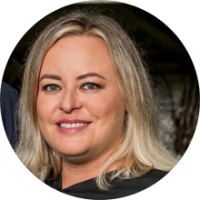
I used to think success meant doing it all myself. Now I know real success comes from collaboration, trust, and lifting others up along the way.
-Linzi Collard, Senior Account Executive, Team Leader, Corporate Traveller
For Linzi, the shift from individual achievement to collective success marked a turning point in her leadership journey. Real impact doesn't come from going it alone. It comes from building others up alongside you.
Tanya LePage, Managing Director, WhereTo, let go of a comparable burden: "I spent years feeling like I had to walk into every room already knowing the solution. Now I think the best leaders are the ones who ask the sharpest questions and create space for others to figure it out together."
Claire Courbet, Vice President Sales, Corporate Traveller, discovered something similar: "I used to believe that you had to have all the answers before stepping into a new role, and that's not necessarily the case. It's your willingness to say yes before perhaps being 100% prepared and really leaning on those around you." Growth comes from collaboration, not having every answer before you take the step.
Kate Reilly, SDR Manager, Corporate Traveller, let go of a limiting belief about qualifications: "I used to think that in order to go for a new role, or to get involved in a new project, that you would have to have 100% of the qualifications or previous direct experience. Whereas now I believe that if you have really great transferable skills like critical thinking and a willingness to learn and a willingness to accept feedback, those are just as important as previous direct experience."
Alesha Campbell, Customer Success Team Leader, Corporate Traveller, challenged a different but equally pervasive myth: "For so long, there was this belief that in order to climb the ladder or to be the best at your job, you had to put your work first. It's just a career belief that's completely changed. Work is a part of what you do every day, but it's not everything when you have that infamous work life balance. It really speaks true to being even a better performer at work."
These shifts aren't superficial. They represent a complete rethinking of what success actually requires — and what gets in the way of achieving it.
What we'd tell our younger selves to stop worrying about
The most liberating career advice often comes down to one thing: permission to stop worrying about things that were never worth your energy.

Not to worry about taking up space. Being loud, being heard. I worried a lot about that when I was younger, and now I am happy to take up space.
— Alesha Campbell, Customer Success Team Leader, Corporate Traveller
Alesha's words capture a shift many women in leadership eventually make: from shrinking themselves to owning their presence. Taking up space isn't selfish. It's necessary.
Tanya would tell her younger self something equally powerful: "Whether you belong in the room. You do. And once you're in it, stop performing and start absorbing. I spent so much energy early on trying to seem ready, seem confident, seem like I had it together, that I sometimes missed what was happening around me. The most valuable thing you can do when you're the least experienced person in a room is listen. Really listen. Watch how decisions get made, notice what's said and what isn't, pay attention to the dynamics. That's where the real education is."
Claire echoes this sentiment: "Stop worrying about whether she belongs. If she's in the room, she's earnt her place. You don't have to prove yourself every second to trust your voice, to speak up and to tell her she's more capable than she thinks." The energy spent proving you deserve to be there is energy that could be used actually doing the work.
Kate advice focuses on what's actually within our control: "One thing I would tell my younger self to stop worrying about would be things that are outside of your control, like other people's actions or the past, and focus on the things that you can control instead which is namely your attitude, your energy, your outlook on life and your positivity."
Linzi’s reflection takes us back to a specific moment that shaped her resilience: "I'd tell my 18-year-old self — travelling through Europe with almost no money, feeling occasional doubts, and just wanting to go home — to stop worrying so much. Those moments taught me how strong I really am. Life and a career aren't about being perfect or having all the answers; they're about showing up, trusting yourself, and knowing that even when it's hard, you're capable of more than you realize."
What doesn't show up on a resume
The career achievements that matter most rarely fit into a job description.

Something that's perhaps not on my resume is the way I advocate for other people, and certainly other people that perhaps aren't in the room. There's enough room for all of us at the finish line, talking and raising people's names in rooms of opportunity and allowing them to step in and grow is certainly something that I hold dearly.
— Claire Courbet, Vice President Sales, Corporate Traveller
Claire's approach reflects something essential about leadership in the travel industry: the most effective leaders create opportunities for others, not just themselves. The advocacy work she does behind the scenes shapes careers in ways no performance review can measure.
Tanya is proud of something equally invisible: "Holding a team together through uncertainty, the kind where the direction isn't fully set yet, people are anxious, and your job is just to keep enough trust and momentum alive until things clarify. That's not a bullet point, but it's some of the hardest and most important work I've done."
Alesha’s pride comes from experiences that have shaped how she connects with people: "I've been very fortunate to travel the world. I've been to 75 countries. That ability to immerse yourself into cultures and build relationships with people around the world. I feel very fortunate to have that ability."
Kate values "my resilience and my positivity when things sometimes don't go to plan."
Linzi focuses on what she's building beyond the office: "I'm proud of the example I set at home: showing my daughters you can be ambitious, kind, and resilient. Showing them nothing is impossible if you work hard. I've taken big steps, pushed myself to limits I didn't think were possible, made sacrifices, and learned to trust myself, all while genuinely caring for the people around me. The friendships I've built and cherish along the way are achievements no resume can capture."
What people underestimate about the work
There's a side to every role that numbers can't capture: the mental and emotional work that keeps everything else running.

The translation work. And I don't mean language, I mean context. A huge part of what I do is bridging the gap between the business and the people building the product.
— Tanya LePage, Managing Director, WhereTo
Tanya continues: "When a stakeholder says, 'we need this to be faster,' a tech team hears something very different than what was meant. When engineers explain a technical constraint, stakeholders often don't have the frame to understand what it means for the roadmap or the customer. Someone has to sit in the middle of that and make the translation in both directions, accurately, without losing nuance, and often in real time."
She explains why this work goes unnoticed: "That means deeply understanding the business problem before walking into a room with a technical team, and equally, understanding the technical reality well enough to represent it credibly back to the business. When it works, everyone thinks the outcome was obvious. When it's missing, things go sideways in ways that are hard to diagnose. It's one of those things that's invisible when it's done well, which is probably why it gets underestimated."
Kate points to another underestimated aspect: "People can underestimate the amount of work that it takes to maintain a really great culture, particularly in the SDR role. There is a lot of cold calling. There can be rejection, and it takes a lot of resilience to keep going. Maintaining a culture where everybody feels like they're still enjoying coming into work."
Claire highlights the emotional dimension: "People tend to underestimate the emotional energy behind leadership. There's a lot of work that goes on behind the scenes that doesn't necessarily show up on a dashboard. The investment and responsibility you feel as a leader in people's careers and livelihoods." That emotional investment isn't a side effect of leadership. It's what makes the leadership effective.
Alesha describes something equally underestimated in corporate travel: "How vital person to person relationship is often with the day to day booking of travel. People don't see the relationship or might not see how important that relationship is. We stand behind the fact that it's not just transactional. This is a relationship that we spend a lot of time fostering that's often overlooked."
Linzi captured the internal discipline required in sales leadership: "People often underestimate the mental discipline behind sales. It's a highly self-motivated role. You have to show up every day with energy, resilience, and belief in yourself, even after setbacks. And in leadership, that pressure doubles because you're not just driving your own results. You're leading from the front and setting the tone for everyone around you."
What a strong day at work looks like
Strong performance isn't always measured in quarterly wins. Sometimes it's the consistency of showing up with intention that builds lasting impact.

Best day at work for me is when I get to be proactive. Be able to proactively reach out to a customer, foster those relationships and see how things are going or provide value to them that was unexpected.
— Alesha Campbell, Customer Success Team Leader, Corporate Traveller
Alesha expands: "Elevate a customer experience and just be in a proactive rather than a reactive space is my favourite day at work." For her, the best days are about creating value before problems arise.
Tanya measures success differently now: "Someone on my team solves a problem in a way I wouldn't have thought of. A hard conversation happens and actually moves something forward. There's a moment, even a small one, where the team is just in it together, the energy is good, people are laughing or riffing off each other, and you can feel the culture you're trying to build actually showing up in real life."
She emphasizes why that matters: "Culture isn't a value on a wall. It's what happens in the in-between moments: the way a team handles ambiguity, whether people feel safe enough to push back, whether there's genuine enjoyment in the work. A great day is when I can see evidence of that. Less about what I personally got done, and more about what we made possible — together."
Claire’s perspective shows how priorities shift as leaders mature: "A great day for me isn't necessarily just about the numbers. Although I love the results. It's more around our people and leaving an individual stronger today than they were yesterday." Results still matter, but developing people matters just as much.
Kate values intentionality: "A great work day for me is intentional, so I like to set out what I'm going to do for the day the night before, so that I don't come in and feel like I'm trying to do a lot of different things at the one time. A really strong day for me is when I close the laptop and I feel like I've made tangible progress on my goals, and also that I've been able to control the things that are within my control, like my energy and my attitude and my outlook."
Linzi connects work to purpose: "These days, a great day is about impact. It's celebrating wins, navigating challenges with resilience, and knowing I showed up not just to perform but to lift others around me. When both results and people grow, that's success. And the best part is going home to my beautiful daughters and husband feeling proud. Not just of what I achieved, but of the example I set and the purpose behind the work I do."
What building a career over time requires
Career paths rarely follow a straight line. Understanding that early can change how you navigate the inevitable detours.

It's okay to own your weaknesses and your gaps, and that people will respect you more for being really authentic and honest about where you need help.
— Kate Reilly, SDR Manager, Corporate Traveller
Kate continues: "And the more that you ask for help, the more help you will receive from people who are super experienced and that will actually help you grow in your chosen field." Asking for help isn't a weakness. It's how you accelerate growth.
Tanya challenges how we evaluate opportunities: "It's not linear, and that's not a flaw in your plan, it's just how it works. Some of the moves that looked sideways or small at the time turned out to be the ones that actually shaped where I ended up." She offers specific advice: "Choose roles based on who you're going to learn from, not just what the role looks like on paper. The leader you work for matters more than the title or even the company. I've learned more from being near the right people — watching how they think, how they handle hard calls, how they build trust under pressure — than from any formal development program. Chasing titles is a much poorer strategy than chasing learning and people you respect."
Alesha questions the traditional up-only career path: "If you really want to build your career, step into other departments. Step into other facets of the business to really understand the full scope of how that business operates. It gives you such a better perspective of other people's jobs and how they do them. But not being afraid to step up, maybe into an executive role. Being able to step down is just as important as well. Building a career is not just a one way path."
Claire's industry insights are deceptively simple but profoundly true: "Roles change, company changes, life changes. But I think what lasts are relationships, trust, and belief in yourself." The specifics of your career will change constantly. What remains are the relationships you nurture and the self-belief you cultivate.
Linzi puts it in perspective: "I wish more people understood that building a career is a marathon, not a sprint. It's about showing up consistently, taking risks, learning from setbacks, and being patient with yourself. Success doesn't just come from hitting targets. It comes from the daily effort, the choices to grow, and the resilience to keep going, even when it's hard. Along the way, the relationships you build, the people you lift, and the example you set matter just as much as the wins on paper."
What International Women's Day 2026 reminds us
The women leading at Corporate Traveller aren't waiting for perfect conditions or permission to lead differently. They're redefining leadership in the travel industry through their willingness to be uncomfortable, to advocate for others, and to show up with both performance and purpose.
Their stories make one thing clear: lasting success doesn't come from perfection or constant self-justification. It comes from building trust — with yourself, your team, and the people you help grow along the way.
That's not just leadership. That's legacy.
At Corporate Traveller, leadership isn't just about titles. It's about impact. It's how we build teams, serve clients, and shape the future of corporate travel. Learn more about our leadership team and how we're redefining modern travel management.
Related resources


