How travel data helps high-growth SMEs plan smarter
Two things are true: Most SMEs (small/medium-sized enterprises) collect travel data. Also, most SMEs don’t really do anything useful with it.
Your SME can be different.
If your business travel reporting starts and ends with reviewing what you spent last quarter, you're not getting the full picture. High-growth businesses treat travel data differently. They don't just look backward at spend. They use it to make decisions about where to expand, how to allocate resources, and what the budget needs to look like for the next month, the next quarter, and the next year.
That sounds great in theory, but let’s explore how this can work in practice for your company.
This is the fourth post in our series on what high-growth SMEs get right about travel. Click here for the full series.
TL;DR
- Learn which travel data is the best to measure for high-scaling UK businesses.
- How SMEs can use travel data during a time of expansion.
- Understand how travel data can form part of your growth strategy

Metrics that matter
Not all travel data carries the same weight. The numbers worth watching connect travel activity to business decisions. They’re not only valuable for your travel budget but they can deliver real insight into areas of growth and opportunity for your core business. To get the most out of your data, here are the metrics to prioritise:
-
Travel spend by department or project
Which parts of the business are driving demand? Is spend generating returns? Did your sales department’s travel costs double but new revenue didn't budge? That could be a dial that needs to be adjusted.
-
Top destinations and travel frequency
Where is your business most active? A jump in trips to a particular city could be a sign of something more significant: a growing client base, a new partnership opportunity, or simply a market worth watching.
-
Average trip cost
How do you see what’s really happening in your program? This metric gives you a baseline for planning and helps you quickly spot the outliers. If a team's average trip cost runs higher than others, there could be a legitimate reason for it. There also could be a policy gap or booking habit that needs attention.
-
Supplier usage (air, hotel, and rail)
Are you consolidating your supplier spend enough to get access to negotiated rates, or are you spreading bookings too thin to get value from any single supplier? This metric is key to helping you adjust your travel policy, directing bookings to the suppliers that make the most sense for your business.
-
Cost per traveller or trip
How does your efficiency compare across teams and regions? Tracking this metric is one of the simplest ways to benchmark how well your travel programme is operating.
How can SMEs use travel data to support expansion?
When teams travel to the same location repeatedly, a story starts to form. High-growth SMEs pay attention to which teams are driving travel demand and where they are driving it. Travel patterns might signal a growing client base. They could point to an emerging market where a regional office or partnership would reduce travel costs and improve responsiveness.
With visibility into travel patterns, strategic decisions can be made about which markets deserve more attention. Pattern recognition pulled from real data helps leaders spot growth opportunities before they become obvious.

Forecasting accurate budgets with confidence
Travel budgets built solely on vibes tend to miss the mark in one of three ways:
- Overspending
- Holding back needed resources and budget
- Allocating your resources and budget to the wrong areas
Data fixes that. Tracking historical patterns and booking trends helps inform future demand, which lets you plan and budget accordingly. Decisions made from data help you to build projections and models that are more accurate and easier to justify internally.
How do Corporate Traveller and Melon make business travel data more useful?
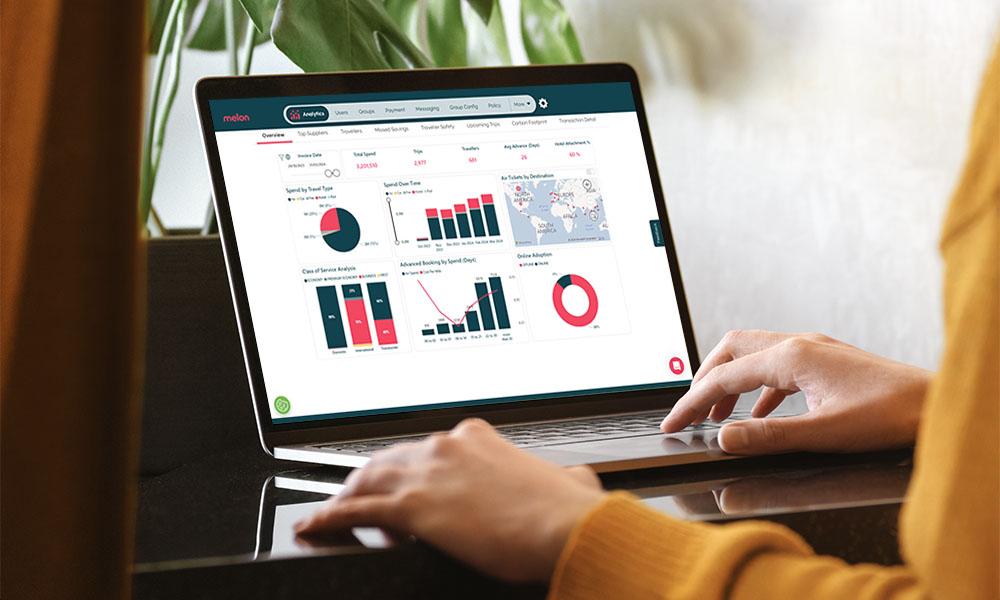
Corporate Traveller's platform, Melon, brings everything together. Centralised reporting dashboards give finance, operations, and leadership a shared view of what's happening across your programme.
You don't need to chase down numbers from different channels or wait for month-end reports to be delivered. Get the information you need, when you need it.
It’s not just having data that matters. It's making sure the right people can see the right data at the right time. Real-time spend visibility means you can flag issues as they happen, not weeks after it’s too late. With customisable reporting, every stakeholder gets the view that's most relevant to them. Finance can track budget adherence while operations can focus on supplier performance and traveller activity.
It’s simple. It’s frictionless. It will save you time and money. See more about how it works.
Travel data as a growth strategy
High-growth businesses don't just collect travel data. They use it to:


When your travel data is centralised, visible, and connected to the people making decisions, it becomes a strategic roadmap for how your business grows.
Are you ready to make business travel more strategic? Corporate Traveller can help. We have the experience, the know-how, and the tech to uncover incredible insights within your travel data. Contact our team today to take the first step.
Are you ready to spend smarter on business travel?
Talk to a Corporate Traveller expert today.